

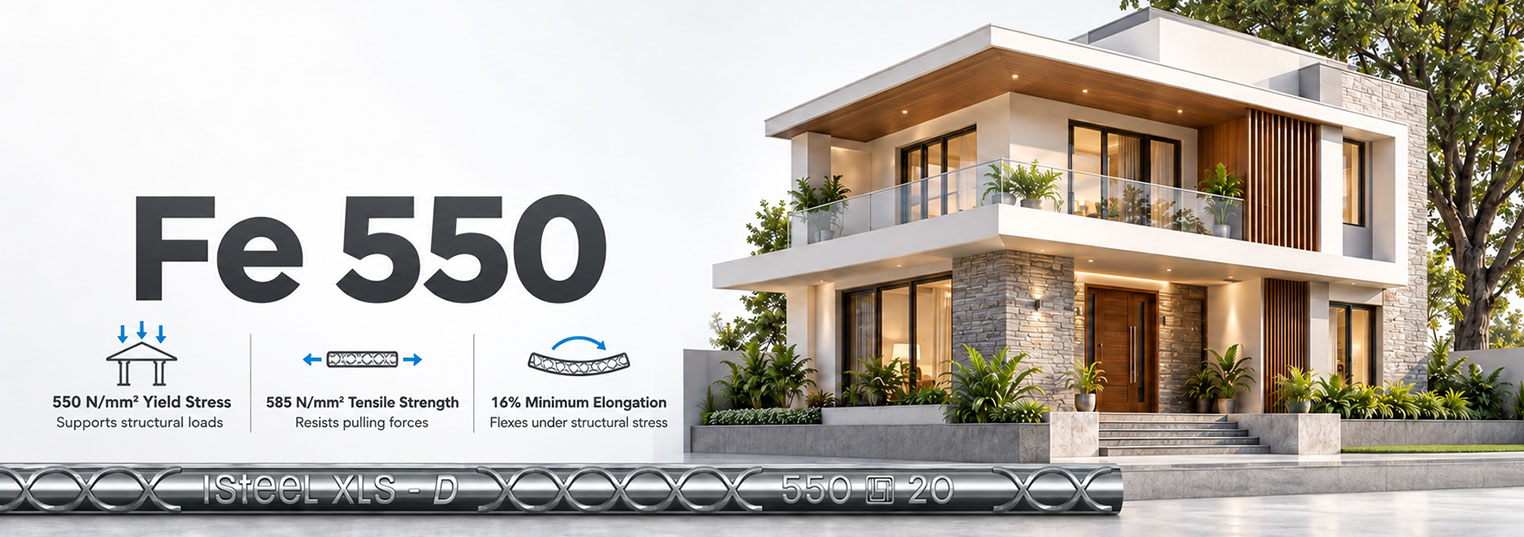
Best 550 TMT Bars: A Complete Guide to Stronger and Long-Lasting Construction
TMT, or Thermo-Mechanically Treated steel, is widely used to reinforce concrete structures. Concrete performs well under compression, while steel reinforcement helps handle tensile forces and structural stress. A high-quality Fe550-grade TMT bar is designed to provide a strong combination of load-bearing capacity and ductility, making it suitable for demanding construction requirements. iSTEEL’s product information states that its XLS-D TMT bars are BIS-approved for concrete reinforcement in Grade Fe550 and have a minimum yield stress of 550 N/mm² and minimum elongation of 16%.
What Are Fe550 TMT Bars?
Fe550 is a grade of reinforcement steel designed to offer a minimum yield strength of 550 MPa. The term “Fe” refers to iron, while “550” indicates the minimum yield strength associated with the grade. This makes Fe550 TMT bars suitable for projects where enhanced structural strength is required.
The manufacturing process is equally important when evaluating TMT steel. Proper thermo-mechanical treatment creates a tough outer structure while retaining the ductility required for bending and handling construction stresses. This balance of strength and flexibility is one of the major reasons why Fe550 TMT bars are widely considered for modern buildings and infrastructure.
Important Characteristics of Fe550 TMT Bars
- High yield strength for improved load-bearing performance
- Good ductility for handling structural movement and stress
- Strong bonding capability with concrete
- Suitable for demanding residential and commercial applications
- Improved durability when manufactured with controlled quality processes
- Available in different diameters for various structural requirements
Why Strength Matters in Constructio
Every building experiences different types of forces throughout its lifetime. The structure must support its own weight, the weight of occupants and equipment, and external forces caused by environmental conditions. Reinforcement steel helps concrete structures manage tensile stress and maintain structural integrity when designed and used correctly.
Higher-strength reinforcement can be especially valuable in projects with demanding load requirements. However, selecting steel should never be based on grade alone. Engineers and construction professionals must consider the structural design, applicable standards, ductility requirements, environmental exposure, and project specifications before selecting reinforcement.
The best choice is always a TMT bar that meets the technical requirements of the specific project and is supported by reliable manufacturing and quality testing.
Benefits of Choosing High-Quality Fe550 TMT Bars
Quality reinforcement steel can contribute significantly to the performance and lifespan of a structure. Well-manufactured Fe550 TMT bars are designed to offer several advantages for construction projects.
1. High Load-Bearing Capacity
One of the main benefits of Fe550 TMT bars is their high yield strength. This characteristic makes them suitable for structural components that need to handle significant loads. When reinforcement is selected according to engineering design requirements, high-strength steel can support efficient and reliable construction.
2. Good Ductility and Flexibility
Strength alone is not enough for reinforcement steel. TMT bars must also provide suitable ductility. A bar with good elongation characteristics can respond better to stress and structural movement without sudden failure.
According to iSTEEL’s product specifications, its XLS-D TMT bars offer a minimum elongation of 16%, along with a minimum yield stress of 550 N/mm². The company also states that its computer-controlled TMT process is designed to provide consistent quenching and bendability.
3. Strong Bonding With Concrete
The surface pattern of TMT bars is designed to help create a mechanical bond with concrete. Proper bonding allows the steel and concrete to work together as part of the reinforced structure.
This is important in components such as:
- Foundations
- Columns
- Beams
- Slabs
- Roof structures
- Retaining structures
Correct bar placement, concrete quality, cover, and construction practices are also essential for achieving the intended structural performance.
Corrosion Resistance and Long-Term Durability
Environmental conditions can have a major impact on reinforcement steel. Moisture, humidity, chlorides, and other exposure conditions can increase the risk of corrosion when materials and construction practices are not appropriate for the environment.
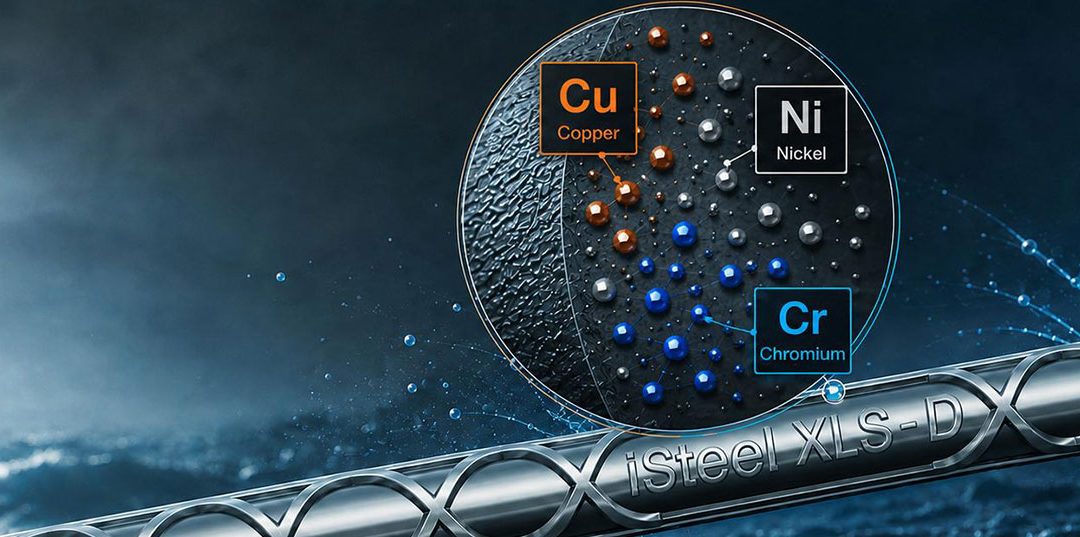
For this reason, buyers should evaluate corrosion resistance alongside strength and ductility. iSTEEL states that its XLS-D product uses a specially formulated alloy, while its website highlights controlled chemical composition and corrosion-focused product features. Its published specifications also list limits for elements such as carbon, phosphorus, and sulphur, along with a minimum CRE-elements value.
When choosing TMT steel for a project, it is important to consider:
- Local environmental conditions
- Exposure to moisture
- Coastal or high-humidity environments
- Concrete quality and cover requirements
- Manufacturing consistency
- Applicable standards and test results
A long-lasting structure depends on the complete construction system, not on one material property alone.
Applications of Fe550 TMT Bars
Because of their strength and versatility, Fe550-grade TMT bars can be considered for a wide range of construction applications, subject to structural design and engineering requirements.
Common Applications Include:
- Individual houses and residential developments
- Multi-storey buildings
- Apartment complexes
- Commercial buildings
- Industrial facilities
- Warehouses
- Educational buildings
- Healthcare facilities
- Bridges and infrastructure projects
- High-load structural components
Different bar diameters are required for different applications. iSTEEL lists TMT bar sizes ranging from 8 mm to 32 mm, with larger diameters intended for applications requiring greater robustness and smaller sizes used according to structural requirements.
How to Identify the Best Fe550 TMT Bars
Finding the right TMT bars requires more than comparing prices. Buyers should evaluate the product based on technical performance, certification, consistency, and suitability for the project.
Check the Grade and Specifications
Always verify that the steel grade matches the structural design requirements. Fe550-grade reinforcement should be selected only when appropriate for the specific application and approved by the relevant construction professional.
Verify Quality Standards
Look for relevant certifications and quality approvals. iSTEEL states that its XLS-D TMT bars are BIS-approved and that its manufacturing operations are certified to ISO 9001:2015. The company also states that its factory testing laboratory is NABL certified under ISO/IEC 17025:2017.
Evaluate Mechanical Properties
Important properties to review include:
- Yield strength
- Tensile strength
- Elongation
- Bendability
- Dimensional consistency
These characteristics help indicate whether the steel meets the required technical specifications.
Consider Manufacturing Consistency
Consistent production and quality testing are essential because reinforcement steel becomes a permanent part of the structure. Buyers should ask for relevant test documentation and ensure that the material supplied matches the specifications required for the project.
Choose the Right Size
Different construction elements require different bar diameters. The selection should be based on structural drawings and engineering calculations rather than assumptions. Using the correct size and spacing is just as important as selecting a suitable steel grade.
Why Quality Testing Is Important
Construction steel is not something that should be selected based solely on appearance. The critical performance characteristics of a TMT bar must be verified through proper testing and quality control.
iSTEEL highlights its Mobile Lab service as a way to provide on-site steel quality testing, and its published product information emphasizes testing and manufacturing controls.
Quality evaluation may involve checking mechanical properties, chemical composition, weight consistency, and other relevant specifications. For builders and homeowners, access to reliable product information and testing support can provide greater confidence in the materials being used.
Key Factors to Check Before Buying
- Verify the required TMT grade
- Review applicable certifications
- Check mechanical property specifications
- Confirm dimensional and weight consistency
- Ask about quality testing procedures
- Consider corrosion performance for the project environment
- Purchase according to approved structural specifications
- Ensure proper storage and handling at the construction site
Building for Strength and the Future
A building is expected to remain safe and functional for many years. The reinforcement steel placed inside its concrete components plays a critical role in supporting this objective. While the steel may not be visible after construction is complete, its quality can influence the structure’s long-term performance.
Choosing suitable Fe550 TMT bars means looking beyond basic price comparisons. Builders and property owners should focus on the combination of strength, ductility, quality control, testing, and suitability for the intended environment.
For projects requiring high-strength reinforcement, iSTEEL presents its XLS-D product as a Fe550 TMT solution with published mechanical specifications, controlled manufacturing, and quality certifications. Its product page states a minimum ultimate tensile strength of 585 N/mm², minimum yield stress of 550 N/mm², and minimum elongation of 16% for the XLS-D bars.
Conclusion
Selecting reinforcement steel is one of the most important decisions in any construction project. The right material can support structural strength, durability, and long-term performance when combined with proper engineering design and construction practices. Buyers should carefully evaluate the steel grade, mechanical properties, certifications, manufacturing consistency, and environmental suitability before making a decision.
Whether the project involves a home, commercial building, industrial facility, or larger infrastructure development, quality should remain a top priority. By selecting reinforcement that meets the required specifications and is supported by reliable testing and quality standards, builders can make more informed decisions for safer and more durable construction.
For projects that require high-strength reinforcement with suitable ductility and quality-focused manufacturing, evaluating the best 550 TMT bars based on verified specifications and project requirements can help create a stronger foundation for long-term construction performance.
Other Blogs

Steel Quality Assurance Services: Ensuring Strength, Safety and Reliability in Construction
Steel is one of the most important materials used in modern construction. From residential homes and commercial buildings…

TMT Tensile Strength Testing: Why It Matters for Strong and Safe Construction
When it comes to building a safe and durable structure, the quality of reinforcement steel plays a critical role. TMT bars are…
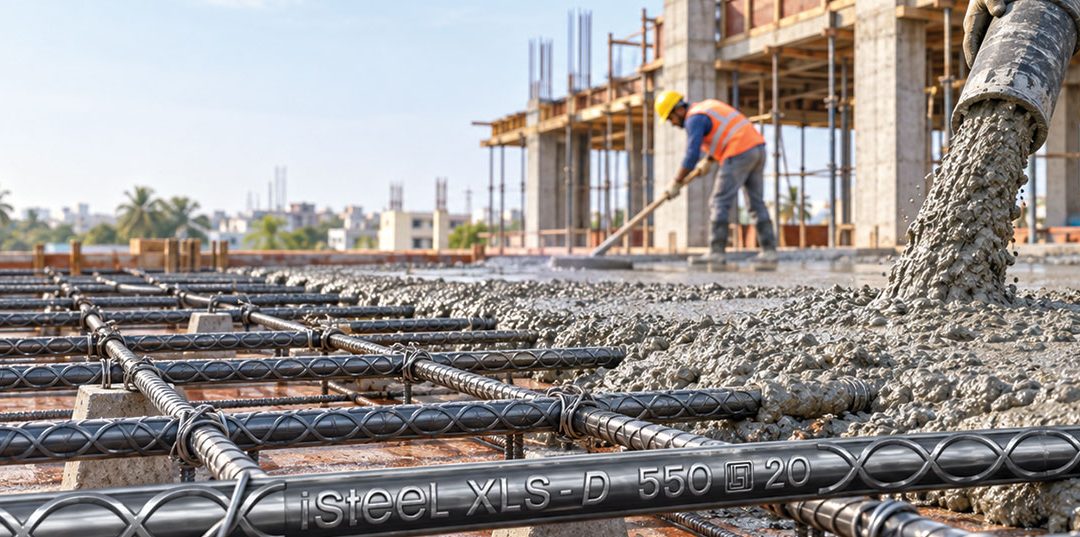
Steel for RCC Construction: What Your Contractor Doesn’t Tell You And What Could Cost You Lakhs Later
Most homeowners in Chennai and Tamil Nadu spend months choosing floor tiles, kitchen fittings, and paint colours for their new home…
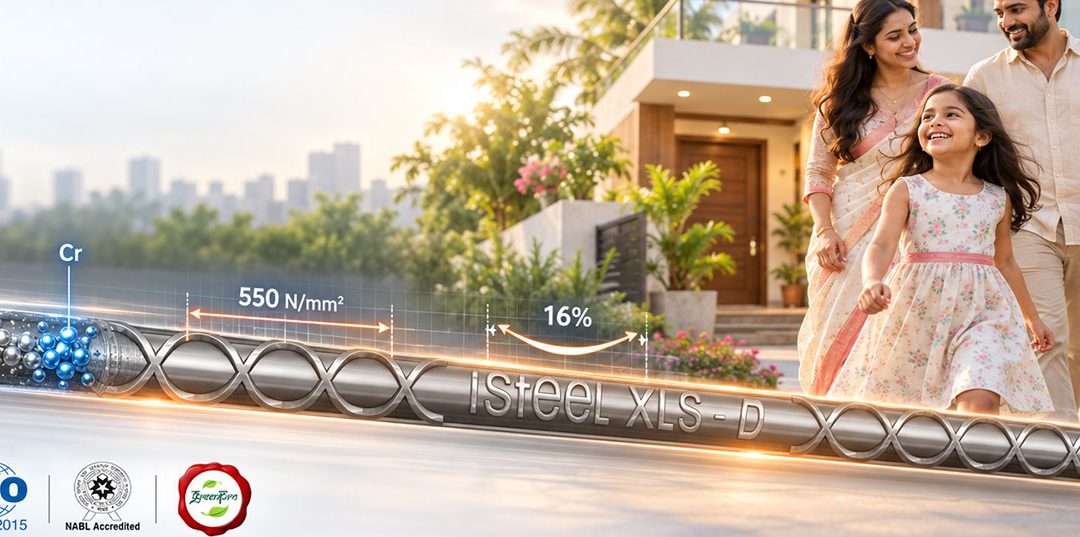
India’s No 1 TMT Bar: Building Stronger Foundations for a Safer Tomorrow
India’s No 1 TMT bar is more than just a construction material; it is an essential part of building structures that are designed…
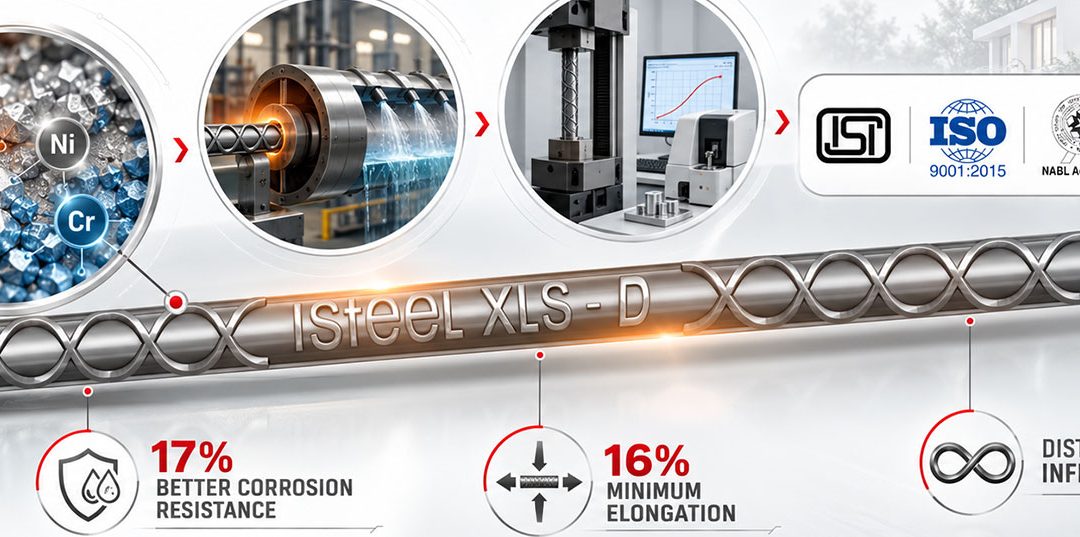
What Separates the Best Steel Company From Every Other? A Builder’s Guide to Choosing Steel That Never Compromises
Every steel supplier will tell you they are the best. They will show you certifications, quote competitive rates, and promise reliable…

Top TMT Bar Manufacturers in Tamil Nadu: What Separates a Premium Steel Brand From a Commodity Supplier
Tamil Nadu is building at a pace that is reshaping its skyline, coastline, and economic geography all at once. From Chennai’s…
Best TMT Bars in Tamil Nadu: What “Best” Really Means When a Home Has to Last 50 Years
Ask ten people what the best TMT bars in Tamil Nadu are and you will get ten different…
Best TMT Steel for Long Lasting Homes: What Every Homeowner in Tamil Nadu Needs to Know Before Construction Begins
When a family builds a home, they are not building for five years or ten years. They are building for a lifetime and often, for the generation…

Rust Proof TMT Bars: Why What You Cannot See Inside Your Walls Determines How Long Your Home Stands
When a home is built, the reinforcement steel disappears behind concrete, plaster, and paint. It becomes invisible and for most homeowners…
Top TMT Steel Brand in Tamil Nadu: What Separates a Truly Premium Steel Brand From the Rest
When engineers, builders, and homeowners in Tamil Nadu search for the top TMT steel brand, they are not simply looking…