

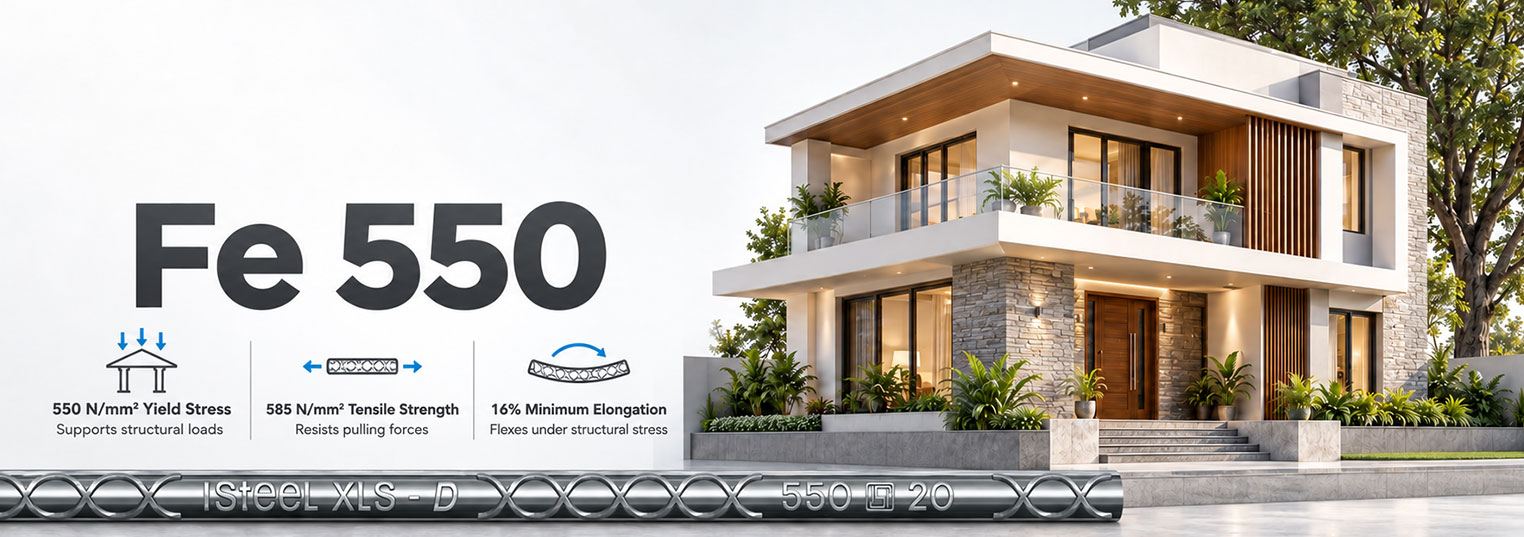
Best Reinforcement Steel for Buildings: What Your Home Deserves and What Most Builders Never Tell You
The best reinforcement steel for buildings is not always the steel that gets the most attention at the dealer counter. It is not necessarily the cheapest option on the rate card, or even the most familiar brand name. It is the steel that combines the right strength grade with genuine corrosion resistance, consistent manufacturing quality, and verified performance properties that protect a structure not just on the day it is built, but through every monsoon, every summer, and every decade that follows.
For homeowners, builders, and engineers across Tamil Nadu particularly in Chennai’s coastal belt where the climate places exceptional demands on reinforcement steel choosing the right steel is the single most consequential material decision in construction. This blog explains what that choice really involves, what separates genuinely premium reinforcement steel from commodity alternatives, and why iSTEEL’s XLS-D TMT bars represent a fundamentally different quality standard.
Why Reinforcement Steel Is Different From Every Other Building Material
Most building materials can be inspected, replaced, or upgraded after construction. Paint can be redone. Tiles can be relaid. Windows can be replaced. Electrical wiring can be rerouted. Even plumbing can be accessed and repaired with manageable disruption.
Reinforcement steel cannot.
Once the concrete is poured and cured, the steel inside a column, beam, or slab is permanently embedded inaccessible without demolishing the structural element itself. The quality of that steel is locked in at construction time and will silently determine the structure’s health for the next 40, 50, or 60 years.
This is why the reinforcement steel decision deserves a fundamentally different level of scrutiny than other material choices. A mistake in tile selection costs time and money to fix. A mistake in reinforcement steel selection costs the structural integrity of the building and potentially the safety of everyone who lives or works inside it.
What “Best” Actually Means for Reinforcement Steel
The term “best reinforcement steel” is used loosely in the market. Every brand claims to be the best. Every dealer asserts their product is superior. To cut through this noise, it helps to define what “best” concretely means across the performance dimensions that matter for real buildings.
1. Strength That Matches Your Structural Design
The best reinforcement steel for any building is, first, the steel grade that matches the structural engineer’s specification. Over-specifying wastes money. Under-specifying compromises safety. The IS 1786 grade system Fe500, Fe550 provides a clear framework: each grade represents a minimum yield strength that structural calculations depend on.
iSTEEL manufacture, Fe500, and Fe550 grades covering the full range of residential, commercial, and infrastructure construction requirements across Tamil Nadu. Each grade is available in the XLS-D specification, adding corrosion resistance to the strength foundation.
2. Corrosion Resistance Matched to Your Site Conditions
This is the dimension where the gap between premium and commodity steel is widest and where the long-term consequences of getting it wrong are most severe.
Standard IS 1786 TMT bars are manufactured to minimum strength and ductility specifications. They are not required to incorporate corrosion-resistant alloying elements. In Chennai’s coastal environment where salt aerosols, persistent humidity, and monsoon moisture create aggressive corrosion conditions standard bars begin measurable internal corrosion within 8–12 years of construction.
iSTEEL’s XLS-D grade incorporates copper and chromium additions in controlled proportions that create a metallurgically superior corrosion barrier built into the steel itself, not applied as a surface coating. This is the difference between reinforcement steel that protects your building for 50 years and steel that begins compromising it within 15.
3. Ductility: The Property That Saves Buildings in Earthquakes
Ductility is a steel property that most homeowners and even many builders do not think about until it becomes relevant in the most dramatic way a seismic event. Ductile steel deforms significantly before fracturing, absorbing seismic energy and giving a structure the capacity to flex without collapsing. Brittle steel fractures suddenly under extreme stress.
Tamil Nadu falls within Seismic Zones II and III under IS 1893. For structures in these zones which includes all of Chennai and a significant portion of the state ductile reinforcement is an engineering requirement, not an option. iSTEEL’s TMT bars are manufactured with the ductility characteristics appropriate for seismic zone construction.
4. Manufacturing Consistency: The Property Nobody Talks About
A single test certificate proves that one sample from one batch met specification on one day. It proves nothing about the bars in the next delivery, the next batch, or the batch after that.
Manufacturing consistency the ability to produce bars that meet specification reliably across every batch, every delivery, every month of the year is what separates a genuinely premium steel manufacturer from a supplier who can produce good results when tested but delivers variable quality in practice.
iSTEEL’s manufacturing process includes systematic in-process quality monitoring at multiple production stages. This consistency is what allows iSTEEL to offer on-site verification through its Mobile Steel Testing Van because consistent manufacturing is what makes that verification reliably confirmatory rather than potentially embarrassing.
5. Verified Quality: The Proof You Can Actually Check
The best reinforcement steel is steel whose quality you can verify not just trust. In an industry where test certificates are easily misrepresented and quality claims are nearly impossible for buyers to independently check, verifiable quality is a genuine differentiator.
iSTEEL’s Mobile Steel Testing Van changes this dynamic entirely. It brings certified testing capability to construction sites and dealer points across Tamil Nadu allowing engineers, builders, and homeowners to verify the yield strength, tensile strength, elongation, and chemical composition of the specific bars going into their structure. On site. With the actual material. Not a supplier-selected sample submitted to a distant laboratory.
The Hidden Threat to Buildings in Tamil Nadu: Corrosion From Within
To understand why corrosion resistance is arguably the most important single property in Tamil Nadu’s reinforcement steel, it helps to understand precisely how corrosion damages buildings and why the process is so dangerous.
Stage 1: Initiation (Years 1–10 in Coastal Zones)
Chloride ions from marine aerosols and humid air gradually penetrate concrete through micro-pores and fine cracks. The rate of penetration depends on concrete quality, cover depth, and environmental chloride concentration. In Chennai’s coastal localities Besant Nagar, Thiruvanmiyur, ECR, Marina-adjacent areas chloride concentrations in air are significantly elevated compared to inland cities. During this stage, there are no visible signs of damage. The structure looks and performs normally.
Stage 2: Active Corrosion (Years 10–18 in Coastal Zones)
Once chloride ions reach the steel surface in sufficient concentration, they break down the passive oxide layer that naturally forms on steel and initiate active electrochemical corrosion. Rust begins to form. The rust occupies up to six times the volume of the original steel it replaces generating significant internal pressure on the surrounding concrete. Still largely invisible from outside, but accelerating.
Stage 3: Structural Damage (Years 15–25 in Coastal Zones)
Internal pressure from expanding rust exceeds the concrete’s tensile capacity. Hairline cracks appear on external surfaces. Concrete begins to spall chunks detach from beams, columns, and slabs. Rust stains appear on external walls. By this stage, the reinforcement has lost meaningful cross-sectional area. Structural assessment reveals damage that requires intervention.
Stage 4: Structural Compromise (Years 20–35 in Coastal Zones)
Without intervention, corrosion progresses to the point where structural capacity is measurably reduced. Buildings in this condition require either major rehabilitation column jacketing, beam wrapping, section restoration or face safety risks that make them unsuitable for occupation.
What Makes iSTEEL the Best Choice for Reinforcement Steel in Tamil Nadu
Purpose-Built for South India’s Construction Demands
iSTEEL is not a generic national steel brand trying to serve every market equally. It is a premium steel brand built specifically for Tamil Nadu’s construction environment one that deeply understands the coastal corrosion challenge, the seismic zone requirements, the infrastructure growth demands, and the aspirations of Tamil Nadu’s homeowners and builders.
The XLS-D product line reflects this focus. The corrosion resistance engineering in XLS-D bars is calibrated for coastal South India’s chloride environment not designed for a national average that understates Tamil Nadu’s coastal challenge.
BIS IS 1786 Certification: The Verified Baseline
Every iSTEEL product carries current Bureau of Indian Standards IS 1786 certification independently verifying that yield strength, tensile strength, elongation, and dimensional specifications are met. For serious structural applications, BIS certification is the non-negotiable starting point, and iSTEEL meets it across all grades.
But iSTEEL treats BIS certification as a floor, not a ceiling. The XLS-D specification adds corrosion resistance engineering that IS 1786 does not mandate because Tamil Nadu’s construction environment demands more than the national minimum standard delivers.
Mobile Steel Testing Van: A New Standard for Quality Transparency
The Mobile Steel Testing Van is iSTEEL’s most visible commitment to quality accountability. No other steel brand in Tamil Nadu’s market offers comparable on-site quality verification. The van operates across iSTEEL’s distribution network from Chennai’s metropolitan area to Coimbatore, Madurai, Salem, and the coastal districts bringing test capability to wherever iSTEEL material is being used.
For a homeowner building their family’s most important asset, the ability to see real numbers from real tests on the real bars going into their structure provides a level of confidence that no printed certificate can match.
Long-Life Proposition: Steel That Outlasts Everything Else
iSTEEL’s brand promise is built around one core idea: the steel inside your structure should outlast everything else in it. Finishes fade, fittings wear, systems age but the reinforcement steel in a well-built iSTEEL structure should be performing at specification in year 50 just as it was in year one.
This long-life proposition is not marketing language. It is an engineering objective, pursued through XLS-D corrosion resistance technology, precision manufacturing, and the quality accountability that the Mobile Steel Testing Van delivers.
Choosing the Right iSTEEL Grade for Your Building
iSTEEL’s XLS-D range covers three IS 1786 grades to match different construction requirements:
- Fe500 XLS-D — The most widely specified grade for mid-rise residential and commercial construction across Tamil Nadu. Balances yield strength, ductility, and XLS-D corrosion resistance for most Tamil Nadu applications including coastal zones
- Fe550 XLS-D — iSTEEL’s highest-strength grade. Specified for high-rise buildings, long-span structures, bridges, heavy industrial facilities, and coastal high-rise projects where both maximum yield strength and corrosion resistance are structurally required
Your structural engineer’s drawings specify the required IS 1786 grade. When you choose iSTEEL, every grade comes with XLS-D corrosion resistance meaning you get the engineer’s specified strength plus the long-life protection that Tamil Nadu’s environment demands.
Real Questions Homeowners and Builders Ask — Answered
How do I know the steel I receive is genuinely iSTEEL quality?
Request iSTEEL’s Mobile Steel Testing Van for on-site verification of your delivery. This service is available across Tamil Nadu and provides direct measurement of the mechanical properties of the actual bars delivered to your site not a certificate from a different sample or a different batch. Additionally, verify iSTEEL’s BIS IS 1786 certification for the specific grade you are procuring.
Does the structural engineer’s grade specification matter if I choose premium steel?
Yes, always. Your structural engineer’s grade specification must be met or exceeded never substituted with a lower grade, even from a premium brand. iSTEEL’s range covers, Fe500, and Fe550, allowing you to match the engineer’s specification precisely while adding XLS-D corrosion protection. Never instruct a contractor to substitute a lower grade to save cost structural design calculations are grade-dependent.
What is the service life of a building built with iSTEEL XLS-D?
No steel brand can guarantee a specific service life too many variables beyond steel quality (concrete quality, cover depth, construction practice, maintenance) influence the outcome. What iSTEEL’s XLS-D corrosion resistance delivers is a measurably extended corrosion initiation timeline 15–25 additional years of corrosion-free service life in Tamil Nadu’s coastal environments compared to standard TMT bars. For a structure designed for a 50-year service life, that difference determines whether the building reaches its design life intact.
iSTEEL Across Tamil Nadu: Accessible Premium Quality
iSTEEL’s distribution network spans Tamil Nadu’s construction markets Chennai’s metropolitan area and suburban corridors, Coimbatore, Madurai, Tiruchirappalli, Salem, Erode, Vellore, and the state’s coastal districts. Premium reinforcement steel should not be accessible only to large commercial developers with direct factory relationships. iSTEEL’s dealer network ensures that the homebuilder in Tambaram, the contractor in Madurai, and the infrastructure developer in Nagapattinam all have access to the same premium product and quality assurance.
The Emotional Truth About Building a Home
Behind every construction project in Tamil Nadu is a family’s most significant investment often the largest financial commitment of a lifetime, and the physical space where children will grow up, parents will age, and memories will be made across generations.
The reinforcement steel inside that home will never be seen. It will never be noticed when it is working correctly. But it will be present in every wall, every floor, every column silently carrying the load of everything and everyone the building protects.
Choosing the best reinforcement steel for that building is not just a technical decision. It is a commitment to the people who will live inside it. iSTEEL’s XLS-D TMT bars are engineered to honour that commitment protecting structures, and the families within them, for generations.
Conclusion
The best reinforcement steel for building fe is steel that delivers the right strength grade for structural design, genuine corrosion resistance for the specific site environment, consistent manufacturing quality across every batch, and the transparency of verifiable on-site testing. In Tamil Nadu’s coastal construction environment, all four of these dimensions matter and standard commodity steel satisfies none of them adequately.
iSTEEL’s XLS-D TMT bars available in, Fe500, and Fe550 grades are engineered to deliver on all four. BIS certified. Corrosion resistant by design. Consistently manufactured. Verifiable on site through the Mobile Steel Testing Van.
Build your home or structure on steel that is designed to last not just to meet the minimum. Build it with iSTEEL.
Other Blogs
Modern Construction Steel Solutions: Building Stronger, Smarter and More Durable Structures
The construction industry is continuously evolving, with increasing demand for materials that offer strength, durability…
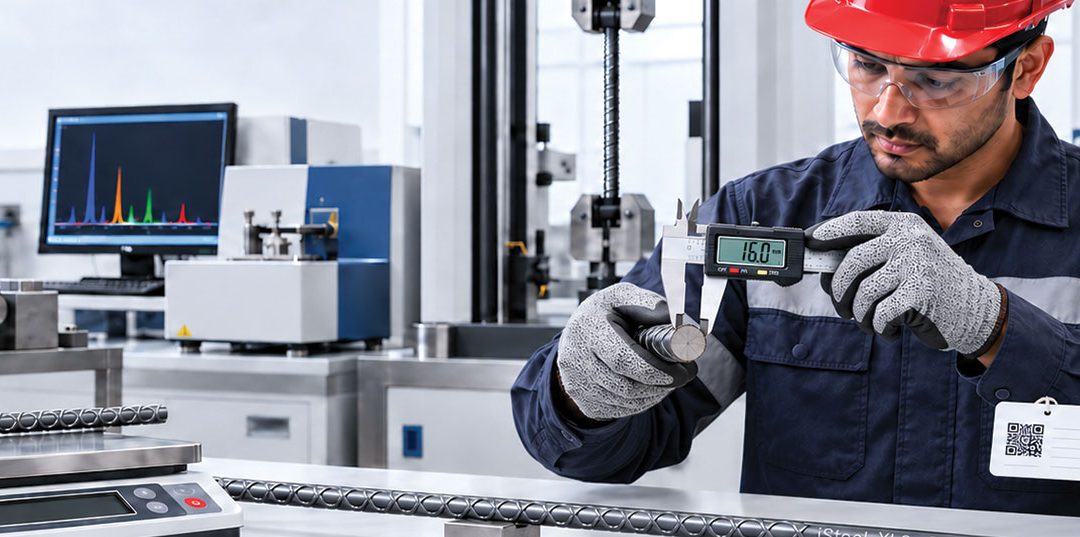
Steel Quality Assurance Services: Ensuring Strength, Safety and Reliability in Construction
Steel is one of the most important materials used in modern construction. From residential homes and commercial buildings…
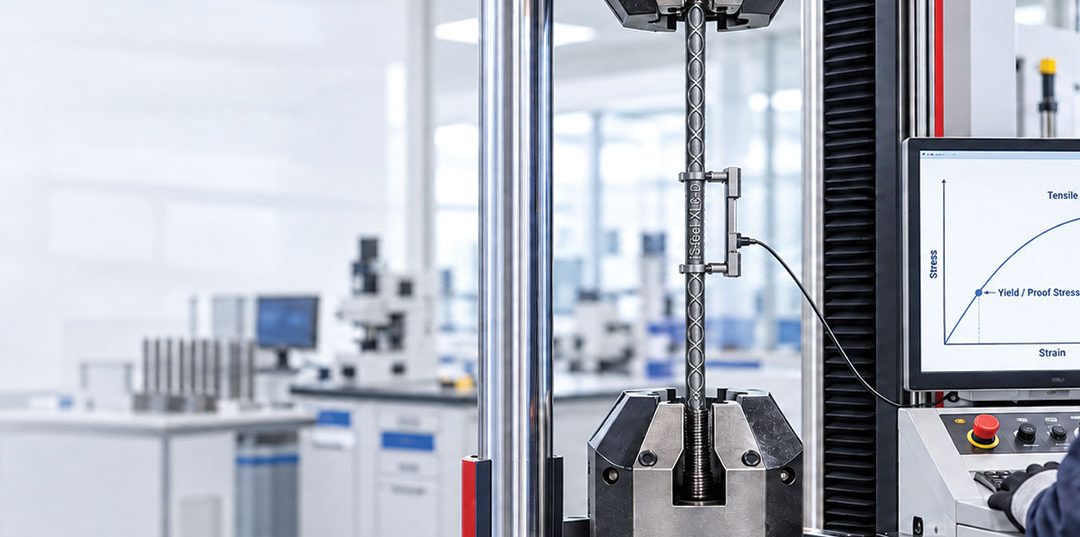
TMT Tensile Strength Testing: Why It Matters for Strong and Safe Construction
When it comes to building a safe and durable structure, the quality of reinforcement steel plays a critical role. TMT bars are…
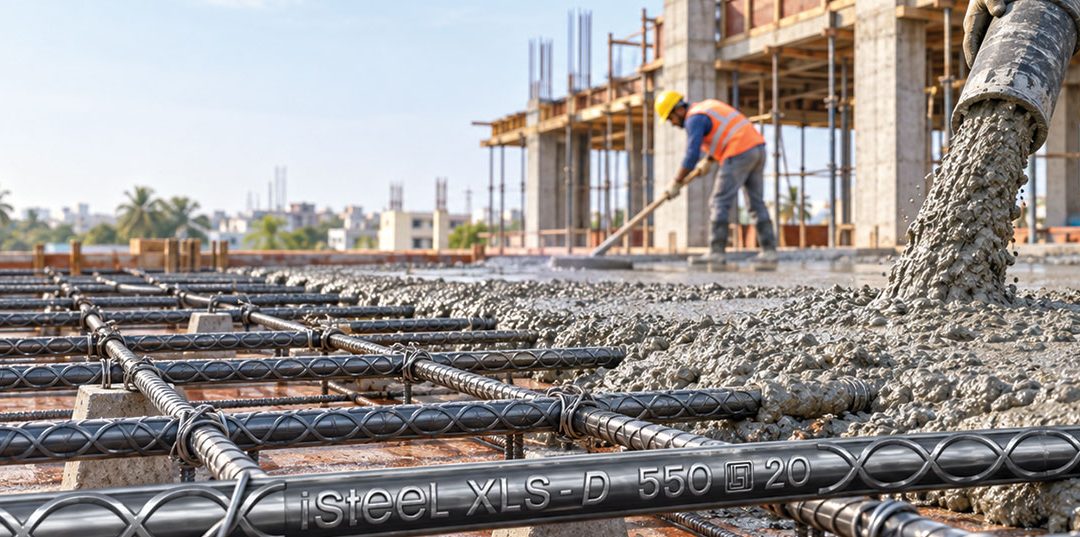
Steel for RCC Construction: What Your Contractor Doesn’t Tell You And What Could Cost You Lakhs Later
Most homeowners in Chennai and Tamil Nadu spend months choosing floor tiles, kitchen fittings, and paint colours for their new home…
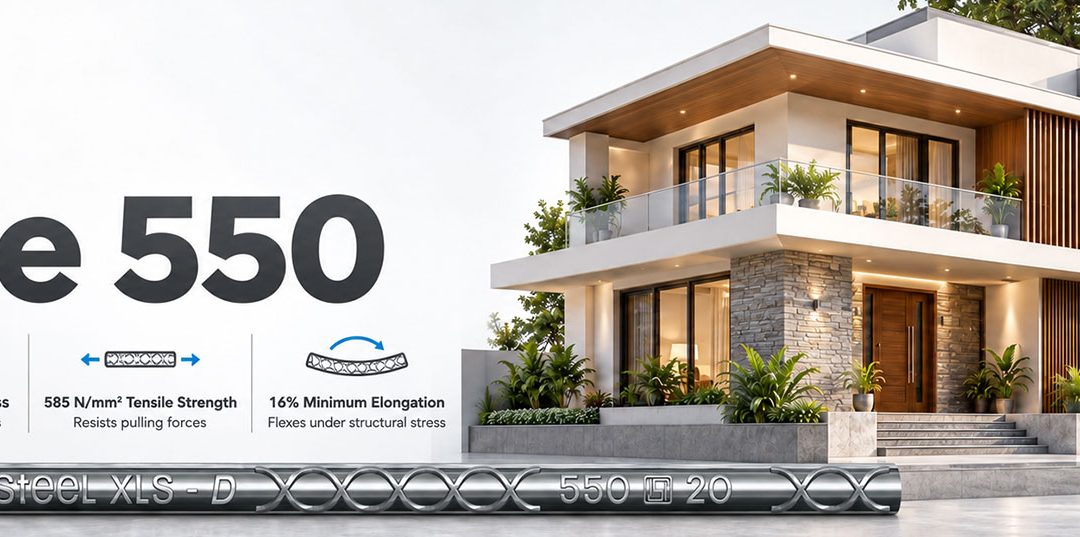
Best 550 TMT Bars: A Complete Guide to Stronger and Long-Lasting Construction
Best 550 TMT bars are an important choice for modern construction projects that require high strength, durability, flexibility…
India’s No 1 TMT Bar: Building Stronger Foundations for a Safer Tomorrow
India’s No 1 TMT bar is more than just a construction material; it is an essential part of building structures that are designed…
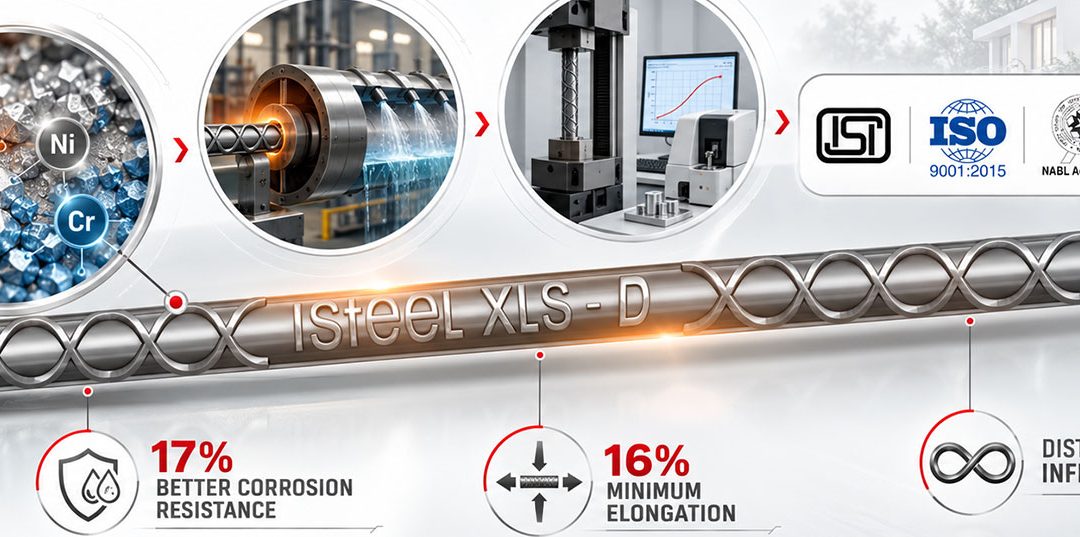
What Separates the Best Steel Company From Every Other? A Builder’s Guide to Choosing Steel That Never Compromises
Every steel supplier will tell you they are the best. They will show you certifications, quote competitive rates, and promise reliable…
Top TMT Bar Manufacturers in Tamil Nadu: What Separates a Premium Steel Brand From a Commodity Supplier
Tamil Nadu is building at a pace that is reshaping its skyline, coastline, and economic geography all at once. From Chennai’s…
Best TMT Bars in Tamil Nadu: What “Best” Really Means When a Home Has to Last 50 Years
Ask ten people what the best TMT bars in Tamil Nadu are and you will get ten different…
Best TMT Steel for Long Lasting Homes: What Every Homeowner in Tamil Nadu Needs to Know Before Construction Begins
When a family builds a home, they are not building for five years or ten years. They are building for a lifetime and often, for the generation…