

Best TMT Steel for Long Lasting Homes: What Every Homeowner in Tamil Nadu Needs to Know Before Construction Begins
The best TMT steel for long lasting homes is not simply the strongest bar on the market or the cheapest option at the dealer. It is the steel that combines the right yield strength, genuine corrosion resistance, manufacturing consistency, and independent quality verification to deliver a structure that performs as designed not just at handover, but 20, 30, and 50 years from now.
For homeowners building in Tamil Nadu particularly in Chennai and the state’s coastal belt this question carries additional urgency. Tamil Nadu’s climate is among India’s most corrosive for reinforcement steel. The decision you make about steel at the foundation stage is the one decision in your entire construction process that you will never be able to revisit.
This guide is written to help you make that decision with full information.
Why the Steel Inside Your Home Is the Most Important Decision You Will Make
Most homeowners think carefully about the visible elements of their home tiles, paint, fittings, façade materials. These choices are visible, reversible, and relatively affordable to change over time. But the reinforcement steel embedded in your columns, beams, slabs, and foundations is none of these things. It is invisible once construction is complete. It is completely irreplaceable without demolition. And its quality or lack of it will determine the structural health of your home for its entire lifespan.
Consider what reinforcement steel actually does inside your home:
- It carries the tensile loads that concrete cannot handle alone preventing columns and beams from fracturing under the weight of the floors above
- It provides ductility in seismic events allowing the structure to flex and absorb energy rather than crack suddenly
- It bonds with surrounding concrete to create a composite structural system the integrity of that bond determines load transfer efficiency
- It resists the slow, cumulative deterioration caused by moisture, humidity, and chemical exposure over decades
When steel fails at any one of these functions through insufficient strength, premature corrosion, or poor bond with concrete the consequences are structural, not cosmetic. And in a home expected to last 50 years, the steel must continue performing every one of these functions for the full duration.
The Silent Threat to Tamil Nadu Homes: Coastal Corrosion
Tamil Nadu presents a construction environment that most homeowners do not fully appreciate when they begin planning their build. The state’s 1,076 km coastline means that a large proportion of Tamil Nadu’s homes are built within reach of marine salt aerosols invisible particles carried inland by sea breezes that settle on surfaces and penetrate into concrete over time.
In Chennai specifically, this exposure affects virtually the entire city. Localities along the coast Besant Nagar, Thiruvanmiyur, Nungambakkam, Marina, Adyar, and ECR face the most intense exposure. But even inland areas like Tambaram, Ambattur, Avadi, and Anna Nagar are subject to elevated chloride levels in air and groundwater compared to non-coastal cities.
Here is what this means for reinforcement steel inside your home’s concrete:
Stage 1 Chloride Penetration (Years 0–8)
Salt particles in the air contain chloride ions. These ions are small enough to penetrate the micro-porosity of concrete over time travelling slowly through the cement matrix toward the embedded steel. During this stage, there is no visible sign of any problem. The structure looks and performs perfectly normally.
Stage 2 Corrosion Initiation (Years 8–15 for standard steel, 20–30+ for corrosion-resistant steel)
When chloride concentration at the steel surface reaches a threshold level, it breaks down the passive oxide film that normally protects steel and initiates active corrosion. Rust begins forming on the bar surface. Again, there is typically no visible sign at this stage the damage is happening entirely within the concrete.
Stage 3 Concrete Damage (Years 12–20 for standard steel)
Rust occupies up to six times the volume of the steel it replaces. As it expands inside the concrete, it generates internal tensile stresses that concrete strong in compression but weak in tension cannot resist. Cracks form from the inside out. Eventually, chunks of concrete begin to separate from the surface in a process called spalling. At this stage, the damage is structural, visible, and expensive.
This three-stage progression is well documented in structural engineering literature and is exactly the mechanism that causes the premature deterioration visible in many Chennai buildings constructed in the 1990s and early 2000s. The homes built with standard TMT steel in coastal areas are showing this damage today well within their expected design life.
The best TMT steel for long lasting homes in Tamil Nadu must include genuine, verified corrosion resistance not as an optional upgrade, but as a fundamental specification requirement.
What Makes iSTEEL XLS-D the Best TMT Steel for Long Lasting Homes
iSTEEL’s XLS-D TMT bars are engineered specifically to address the structural and environmental demands of homes built in Tamil Nadu’s coastal climate. The XLS-D grade is not a standard TMT bar marketed with premium language it is a product with specific engineering differences that translate directly into longer structural life.
1. Corrosion Resistance at the Alloy Level
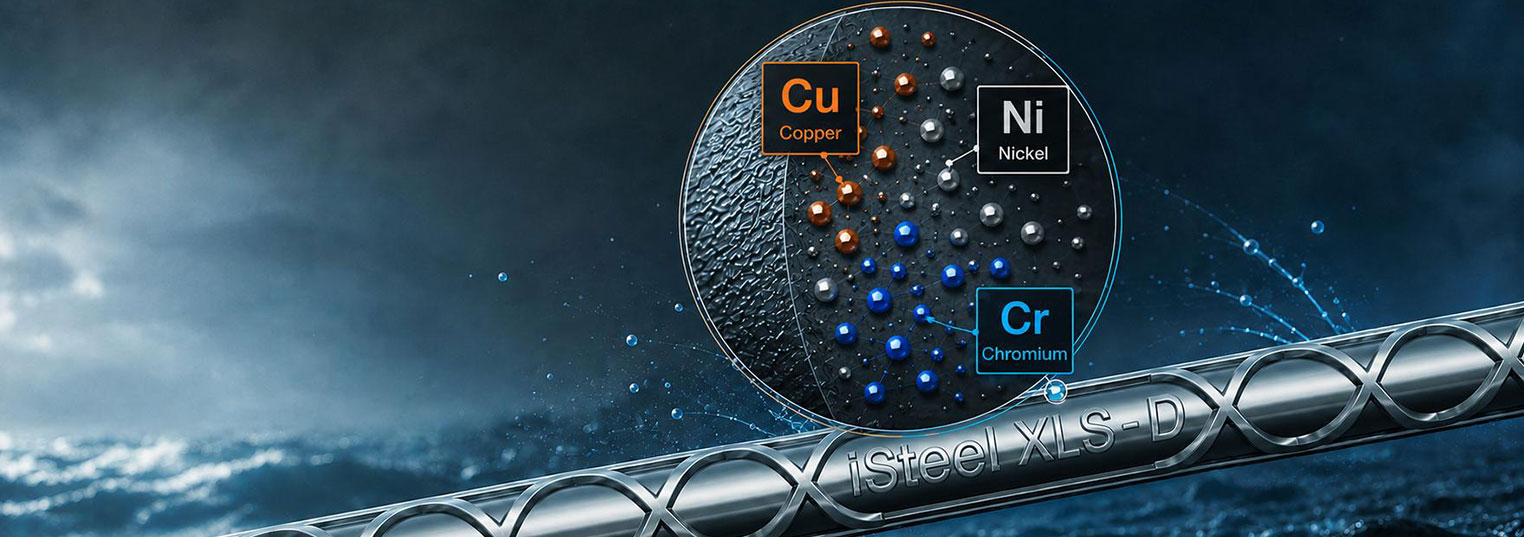
Standard IS 1786 TMT bars are manufactured from carbon steel without mandated additions of corrosion-resistant alloying elements. iSTEEL’s XLS-D bars incorporate copper and chromium additions in controlled proportions elements that improve the steel’s inherent corrosion resistance by creating a denser, more protective surface oxide layer. This slows chloride penetration and delays corrosion initiation significantly.
In coastal Tamil Nadu conditions, the practical effect is to extend the corrosion-free structural life of a home from the 12–15 years typical for standard TMT bars to 30 years or more a difference measured in decades of additional safety and reduced maintenance for your family.
2. BIS IS 1786 Certification Independent Verification
Every iSTEEL XLS-D bar is manufactured to BIS IS 1786 certified standards independently verified by the Bureau of Indian Standards for yield strength, tensile strength, elongation, and bend performance. BIS certification is the minimum standard any responsible homeowner should demand from their steel supplier. It means the product has been tested by an independent authority, not just by the manufacturer.
For homeowners, asking to see the BIS licence number and verifying it is current for the specific grade supplied is a simple step that filters out the uncertified and substandard steel that unfortunately remains present in parts of Tamil Nadu’s market.
3. The Mobile Steel Testing Van Quality You Can Verify at Your Site
Perhaps the most distinctive thing iSTEEL offers homebuilders in Tamil Nadu is the Mobile Steel Testing Van a quality verification service that brings certified testing capability directly to construction sites.
This matters enormously for individual homeowners who lack the resources or knowledge to send steel samples to testing laboratories and interpret the results. With iSTEEL’s Mobile Testing Van, you can have the actual bars being used in your home’s construction tested on-site verifying that yield strength, tensile strength, elongation, and chemical composition match the specification you paid for.
No other TMT brand in Tamil Nadu currently offers this level of quality transparency to individual homebuilders. For a family investing ₹50 lakh, ₹1 crore, or more in a home they expect to last 50 years, this verification is not a luxury it is exactly the kind of assurance the decision deserves.
4. Consistent Manufacturing Quality Across Every Batch
A test certificate from a single sample proves very little if the rest of the batch was not manufactured to the same standard. iSTEEL’s manufacturing process includes in-line quality monitoring and batch-level documentation ensuring that the consistency of alloy composition, cooling process, and mechanical properties is maintained across the entire production run, not just the sample submitted for certification.
For a homebuilder receiving multiple deliveries of steel over the course of construction, this batch-level consistency means every bar going into every column and beam meets the same standard.
5. High Strength for Optimised Structural Design
iSTEEL’s XLS-D TMT bars are available in Fe500D and Fe550D grades providing structural engineers with the strength options needed for different applications within the same home. Higher grade bars allow engineers to optimise reinforcement design, reducing steel congestion in column-beam junctions and improving concrete placement quality both of which contribute to better long-term structural performance.
Choosing the Right TMT Grade for Your Home: A Practical Guide
For homeowners working with structural engineers and contractors in Tamil Nadu, understanding which grade to specify for different parts of your home is useful knowledge:
Foundation and Ground Beams
These elements are in direct contact with soil and groundwater often the most corrosive microenvironment in a home’s structure. Fe500D or Fe550D XLS-D is strongly recommended, particularly in coastal localities where groundwater chloride levels are elevated.
Columns
Columns carry the full vertical load of the structure and are critical for seismic performance. Fe500D or Fe550D with the “D” ductility designation is appropriate providing both load capacity and the energy-absorbing behaviour needed for earthquake resistance.
Beams and Slabs
Fe415D or Fe500D is commonly used for beam and slab reinforcement in residential construction. For homes in coastal areas or high-humidity zones, XLS-D corrosion resistance is recommended regardless of strength grade.
Water-Retaining Structures
Underground sumps, overhead water tanks, and swimming pools present the most aggressive corrosion environment in any residential structure — direct and continuous water contact. Fe500D or Fe550D XLS-D is the appropriate minimum specification for any water-retaining structural element.
What to Ask Your Steel Dealer Before Buying TMT Bars for Your Home
Most homebuilders in Tamil Nadu rely on their contractor or a local dealer for steel procurement without asking the questions that would reveal quality differences between products. These are the questions that every homeowner should be asking:
- Is this steel BIS IS 1786 certified for this specific grade? Can I see the licence number?
- What is the chemical composition of this batch specifically, are corrosion-resistant alloying elements present?
- Can the steel be tested on-site before I accept delivery?
- Is this from the same batch as the test certificate you are showing me?
- What is your return or replacement policy if quality is found to be non-compliant?
An iSTEEL dealer can answer every one of these questions and back those answers with on-site testing through the Mobile Steel Testing Van if needed.
iSTEEL: A Brand Built Around the Homes of Tamil Nadu
iSTEEL is not a pan-India commodity steel brand. It is a premium TMT brand built with a specific understanding of Tamil Nadu’s construction environment the coastal climate, the soil conditions, the seismic context, and the aspirations of the families who build homes here.
The XLS-D product line, the Mobile Steel Testing Van, the distribution network across Chennai and Tamil Nadu’s key construction markets all of these reflect a brand that has oriented itself around the needs of builders, engineers, and homeowners in this specific geography.
For families building their first home in Velachery or Perumbur, for parents building for their children in Coimbatore or Madurai, for couples building their retirement home on the ECR iSTEEL’s long-life proposition is built around one belief: the steel inside your home should protect your family for as long as your family needs it to.
Conclusion
The best TMT steel for long lasting homes is steel that has been engineered for the specific environment your home will stand in, verified through independent certification, and backed by a quality assurance process transparent enough to be verified on your own construction site.
In Tamil Nadu’s coastal construction environment, that means corrosion-resistant alloy composition, BIS IS 1786 certification, precision manufacturing consistency, and the on-site verification that only iSTEEL’s Mobile Steel Testing Van currently provides.
Your home is the most significant investment your family will make. The steel inside it is the foundation that everything else rests on. Choose it with the care the decision deserves choose iSTEEL XLS-D, and build a home that stands for generations.
Other Blogs
Modern Construction Steel Solutions: Building Stronger, Smarter and More Durable Structures
The construction industry is continuously evolving, with increasing demand for materials that offer strength, durability…
Best Reinforcement Steel for Buildings: What Your Home Deserves and What Most Builders Never Tell You
Every home tells a story. The design, the rooms, the finishes these are the chapters that families remember. But behind every…
Steel Quality Assurance Services: Ensuring Strength, Safety and Reliability in Construction
Steel is one of the most important materials used in modern construction. From residential homes and commercial buildings…
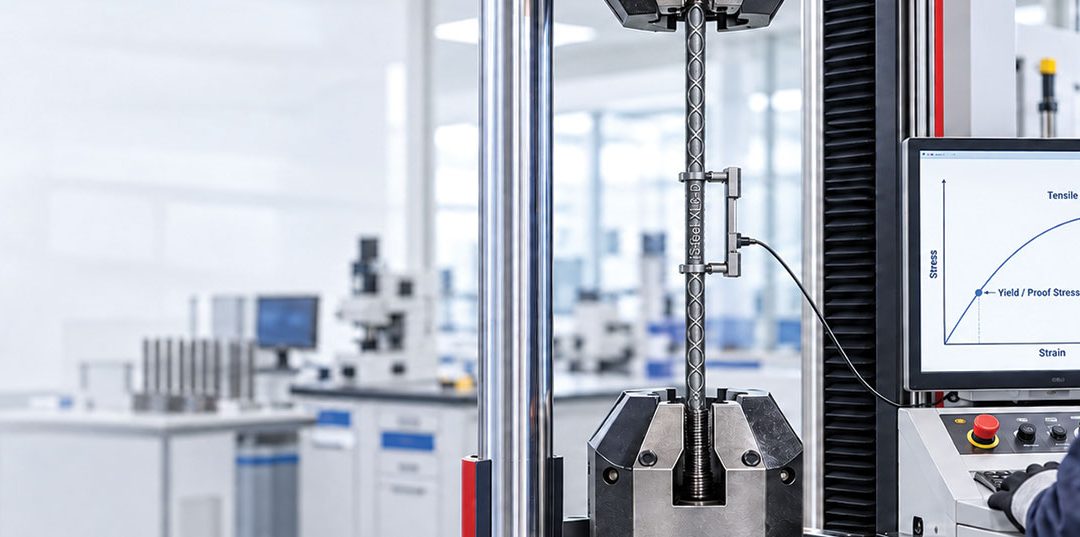
TMT Tensile Strength Testing: Why It Matters for Strong and Safe Construction
When it comes to building a safe and durable structure, the quality of reinforcement steel plays a critical role. TMT bars are…
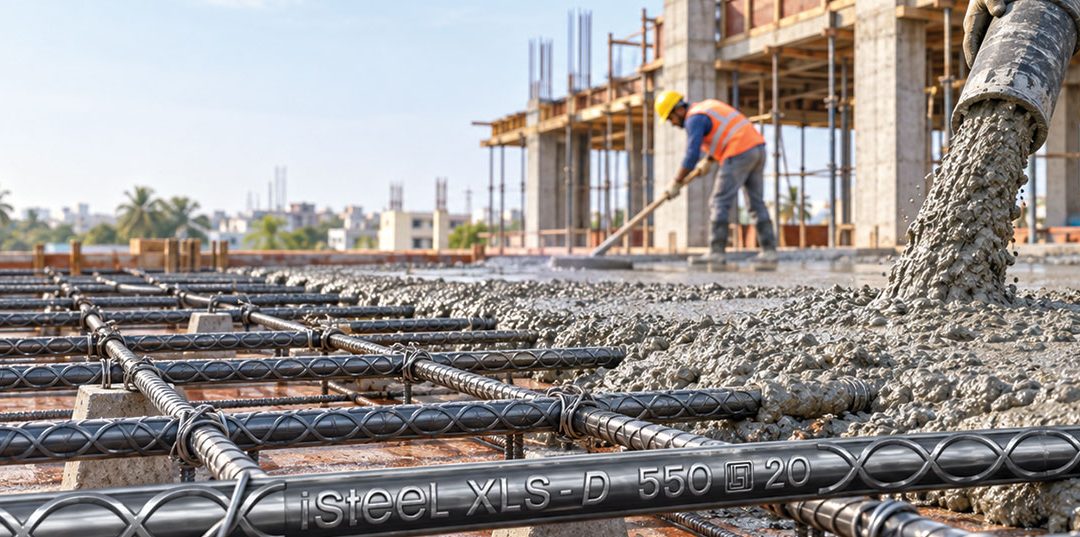
Steel for RCC Construction: What Your Contractor Doesn’t Tell You And What Could Cost You Lakhs Later
Most homeowners in Chennai and Tamil Nadu spend months choosing floor tiles, kitchen fittings, and paint colours for their new home…
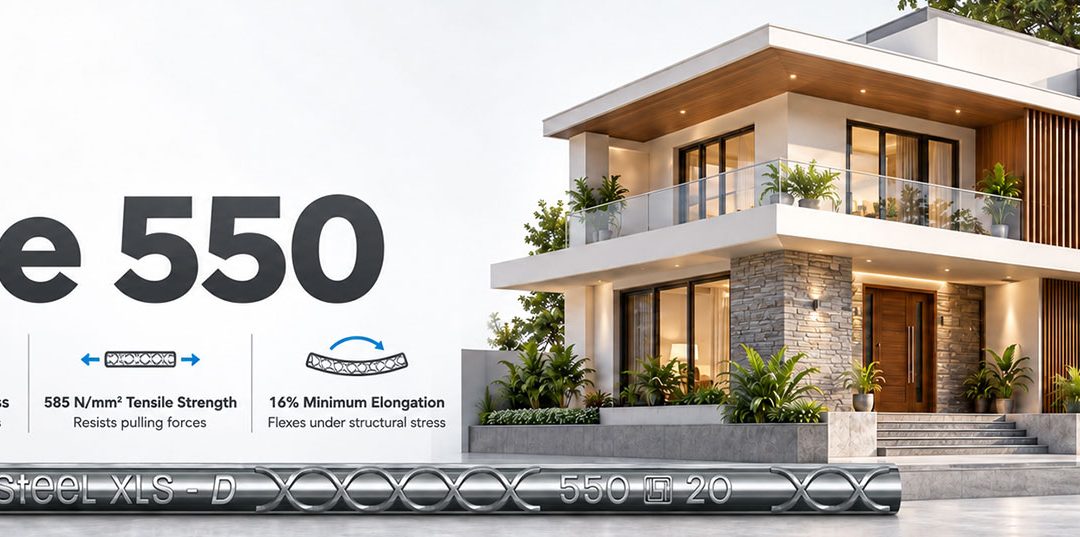
Best 550 TMT Bars: A Complete Guide to Stronger and Long-Lasting Construction
Best 550 TMT bars are an important choice for modern construction projects that require high strength, durability, flexibility…
India’s No 1 TMT Bar: Building Stronger Foundations for a Safer Tomorrow
India’s No 1 TMT bar is more than just a construction material; it is an essential part of building structures that are designed…
What Separates the Best Steel Company From Every Other? A Builder’s Guide to Choosing Steel That Never Compromises
Every steel supplier will tell you they are the best. They will show you certifications, quote competitive rates, and promise reliable…
Top TMT Bar Manufacturers in Tamil Nadu: What Separates a Premium Steel Brand From a Commodity Supplier
Tamil Nadu is building at a pace that is reshaping its skyline, coastline, and economic geography all at once. From Chennai’s…
Best TMT Bars in Tamil Nadu: What “Best” Really Means When a Home Has to Last 50 Years
Ask ten people what the best TMT bars in Tamil Nadu are and you will get ten different…